Research

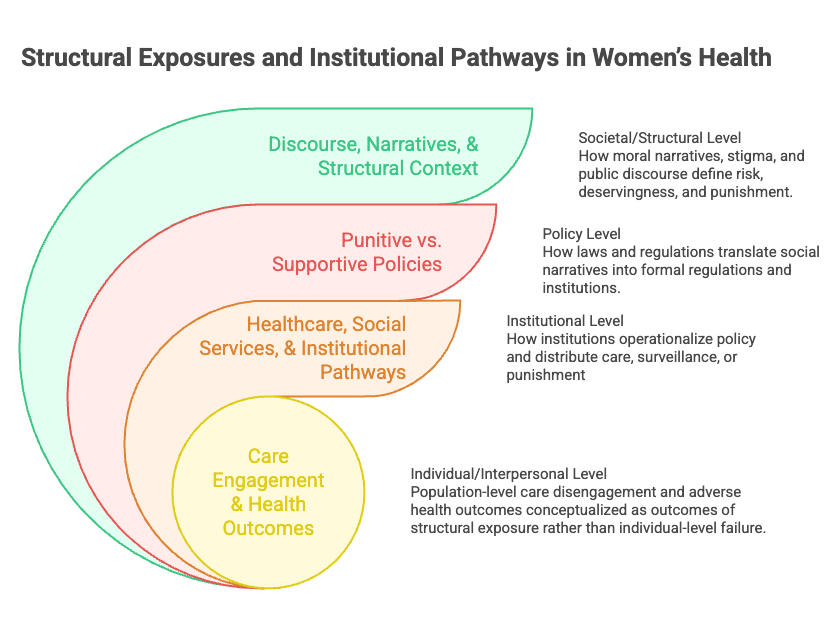
My research centers on gender equity and reproductive justice utilizing community health science approaches. I examine connections between social determinants of health and health disparities, in gender-based violence, reproductive health, maternal and child health, and sexually transmitted infections/HIV. I utilize quantitative and qualitative research methodologies to unravel the multifaceted nature of health issues and develop evidence-based interventions. A notable example of my work is an examination of the structural barriers impeding sustained engagement in HIV care. I have also delved into health system-level determinants that contribute to the gaps in preventing congenital syphilis.

Research Portfolio

I examine the exposure of Asian and Pacific Islander college students to a confluence of challenges, including sexual violence, racism, institutional betrayal, and the profound repercussions of the COVID-19 pandemic on their physical and mental health. This project magnifies my commitment to understanding the intersection of gender-based violence with other forms of violence, such as racism and xenophobia, and their far-reaching effects on health outcomes.

Additionally, I evaluate the impact of substance use, particularly methamphetamine, on the occurrence of congenital syphilis. This research is supported by the National Research Service Award (F31) from the National Institute of Drug Abuse. The core objective of my research is to identify social determinants of health that is manifested in institutional policies, norms, and stigma, affecting women, particularly Black and Hispanic women, that wield influence over maternal and infant health outcomes. This priority populations in this research are women of reproductive age with syphilis, pregnant women with syphilis, and case mothers of infants born with congenital syphilis. By closely examining the relationship between substance use among the priority populations and congenital syphilis incidence, my research aims to provide insights that can inform the development of interventions linking substance abuse treatment with maternal health services.

My domestic research pursuits have predominantly centered on the pressing issues of sexual violence and intimate partner violence on college campuses. My investigations have delved into the experiences of students, staff, and faculty, with the overarching goal of enhancing campus-based prevention efforts. Employing a combination of in-depth interviews, focus groups, surveys, photovoice, and program evaluation, my research in this domain has yielded key publications and presentations, including:

  • “They Don’t See Us”: Asian Students’ Perceptions of Sexual Violence and Sexual Harassment on Three California Public University Campuses (2024).
  • Opening the ‘Black Box’: Student-Generated Solutions to Improve Sexual Violence Response and Prevention Efforts for Undergraduates on College Campuses (2022).
  • Student, Staff, and Faculty Perspectives on Intimate Partner and Sexual Violence on 3 Public University Campuses (2022).
  • Similarities and Differences in NCAA Student Athletes’, Coaches’, and Administrators’ Perspectives of Campus-Based Sexual Violence (2021).

Through these projects, I have garnered invaluable insights into the intricate challenges associated with addressing sexual violence within the context of academic institutions, emphasizing the pivotal role of involving diverse stakeholders in prevention efforts.

Concurrently, my international research endeavors have revolved around gender-based violence, sexual health, and the exploration of social determinants of health, particularly in resource-limited settings. My work in sub-Saharan Africa entailed an examination of masculinities to inform gender-transformative violence prevention programs, as well as an investigation into alcohol use patterns within agrarian, trading, and fishing communities. Additionally, I contributed to a case study focused on adapting the SASA! intervention to prevent violence in rural Tanzania. My international research has yielded key publications and presentations, including:

  • Examining Masculinities to Inform Gender-Transformative Violence Prevention Programs: Qualitative Findings from Rakai, Uganda (2022).
  • Prevalence and Correlates of Men’s and Women’s Alcohol Use in Agrarian, Trading, and Fishing Communities in Rakai, Uganda (2020).
  • Adapting SASA! to Prevent Violence in Rural Tanzania: Lessons Learned from a Mixed-Methods Case Study (2018).

My international research engagements have provided me with a unique perspective on communities facing distinct challenges related to violence, health, and gender dynamics. These experiences underscore the critical importance of culturally tailored interventions.

Goals

My future research will address disparities in maternal and infant morbidity and mortality, with a deeper foray into the realm of reproductive health. I am dedicated to pioneering initiatives that effectively connect substance use treatment with maternal health services, forging a more holistic approach to healthcare. Preventing sexual violence on college campuses and fortifying student support services stand as pivotal pillars of my future research agenda. Through these initiatives, I aspire to create safer academic environments that safeguard the well-being of students. I am deeply committed to translating research outcomes into actionable policies and interventions that bring about positive changes in communities.

Eunhee is an early stage investigator in sexual and reproductive health. Her research pursuits are centered on understanding the complexities of gender and race-based violence, sexual and reproductive health dynamics, and the broader social determinants influencing health outcomes. Eunhee employs a mixed-methods research approach to understand how social and cultural contexts intersect with health and disease outcomes.

Eunhee Park, Ph.D., M.P.H.
Postdoctoral Scholar
School of Medicine and Health Sciences
George Washington University
email: eunhee.park@gwu.edu
web: eunheepark.com